
In the modern academic landscape, it’s time to bid farewell to the archaic tradition of writing a thesis. The integration of Generative AI and hyperlinked websites offers a revolutionary approach to demonstrating expertise and contributing to one’s field. This blog post explores how these advanced methodologies not only enhance knowledge presentation but also streamline the evaluation process, making the age-old dissertation a relic of the past. Join us as we delve into the future of academic excellence, where innovation and efficiency take center stage.
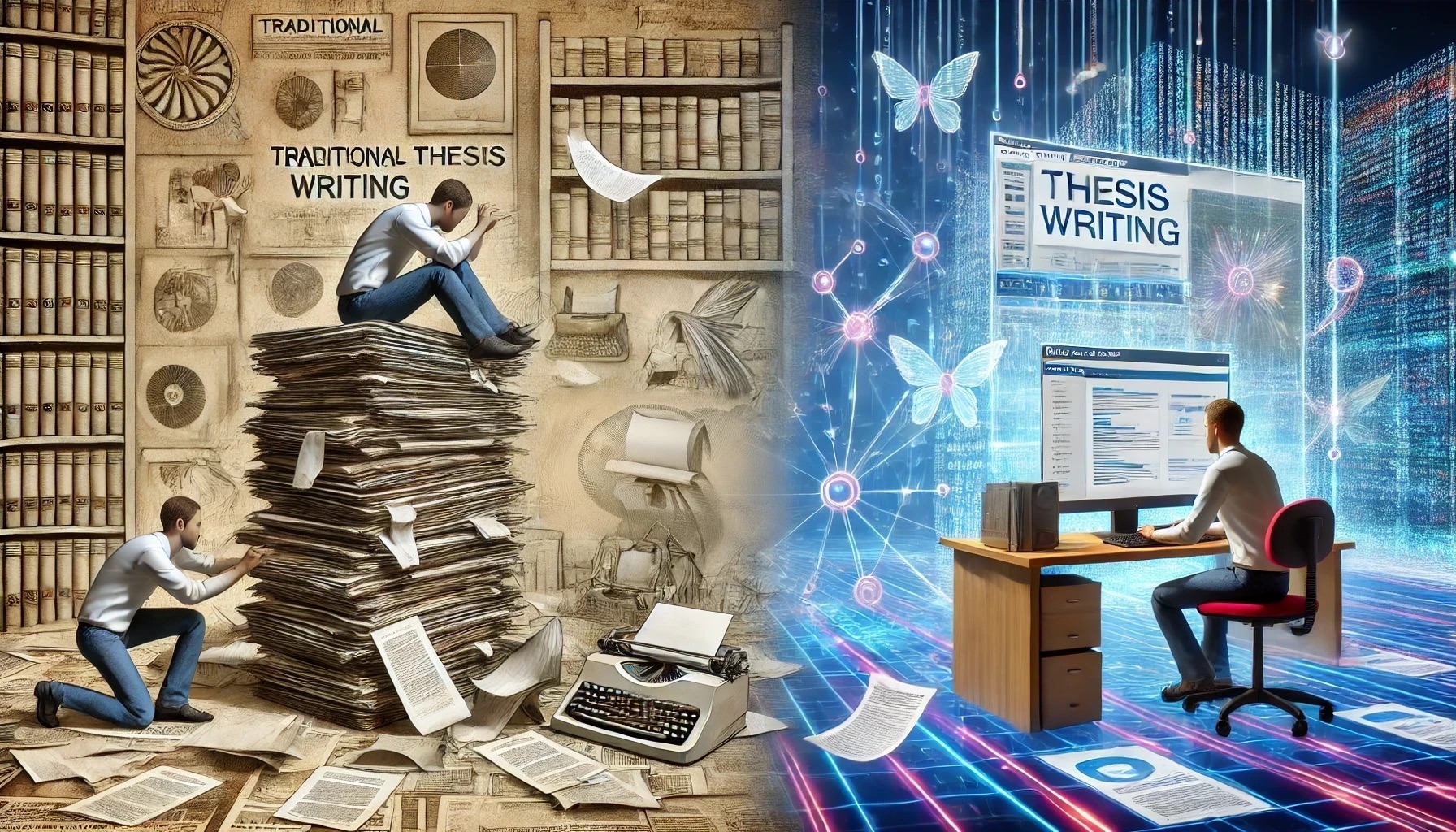
Time to Bury the Ancient Tradition of Writing a Thesis
The age-old practice of writing a thesis is overdue for retirement. The traditional dissertation has become obsolete in an era dominated by Generative AI and innovative dissemination methods. We can significantly enhance academic and professional practices by adopting new methodologies to demonstrate a person’s ability to contribute to their field of expertise.
The Ultimate Purpose of a Thesis
Traditionally, a thesis’s ultimate purpose is to demonstrate one’s knowledge and command of a subject matter domain and propose an addition to the understanding of that domain. Modern approaches can enhance this process by leveraging Generative AI and hyperlinked websites. Using Generative AI, a thesis can effectively compile what is already known within the subject matter domain, thus demonstrating the author’s knowledge and command. Additionally, the thesis should propose something not known but potentially relevant and an approach to verify it. The author can demonstrate this by proposing a hypothesis and line of research or presenting research that has just been completed and is ready for peer review.
The Case for Generative AI
Generative Artificial Intelligence is revolutionizing the way we approach research and presentation. Imagine having a reference library and research assistant at your fingertips, capable of processing vast amounts of information in seconds. Generative AI serves as an army of copy editors and proofreaders, ensuring that the work is comprehensive and polished to perfection.
The sheer volume of research supporting the use of Generative AI is staggering. It allows for the concentration on original thought or premise and enhances the ability to show a hypothesis is tenable. However, critics argue that people may become overly dependent on AI or that AI could produce erroneous conclusions. Yet, the benefits far outweigh these concerns, especially when human oversight is maintained.
Hyperlinked Websites as a Superior Alternative
Hyperlinked websites offer a dynamic and interactive way to present complex theories and relationships. Unlike traditional thesis papers, which are linear by design and rely on footnotes, hyperlinked websites allow for a non-linear content exploration, making the presentation far more efficient and effective. Further enhancing the process may be achieved by utilizing predefined website templates or modular website components focused on specific knowledge domain requirements.
Consider the traditional thesis defense—a static, often tedious process of peer review and oral defense. Compare that to navigating a hyperlinked website where readers can easily access supporting documents, videos, and interactive models. This method reduces routine non-value work and makes evaluation and vetting of the work much more manageable. An AI-supported peer review process using an automated website review tool could significantly improve the oral defense process. Reviewers would be able to identify areas of concern quickly and develop a focused line of questioning. Critics may argue that this approach lacks the rigor of traditional methods, but the evidence shows that it enhances understanding and engagement.
Enhanced Evaluation with AI and Hyperlinks
Combining Generative AI with hyperlinked websites simplifies the evaluation process. Generative AI can swiftly analyze the validity of the presented thesis and premise, while human evaluation ensures accuracy and relevance. This synergy creates a more effective and efficient assessment process, reducing the chance of plagiarism and eliminating non-core data and arguments.
While some might worry about AI’s potential for error, the collaborative approach of AI and human oversight mitigates this risk. Research demonstrates that this method is viable and superior to traditional practices.
Addressing Counterarguments
Valid counterarguments to these new methodologies exist, such as concerns about dependency on AI and the reliability of AI-generated content. However, these concerns can be addressed through stringent oversight and continuous improvement of AI technologies. Evidence shows that when used responsibly, AI enhances the quality and efficiency of research and presentation.
Conclusion
The traditional thesis writing process is outdated due to modern technologies. Generative AI and hyperlinked websites provide innovative and superior alternatives that enhance the ability to contribute to one’s field, reduce non-value work, and make the evaluation process more efficient. It’s time for academia to embrace these advancements, ensuring that future scholars are better equipped to demonstrate their expertise.
Let’s adopt these new methodologies and leave the antiquated thesis writing process behind. It is time for educators, institutions, and students to embrace the potential of AI in academic research. Moving beyond traditional methods to foster a more creative and innovative academic environment is not just desirable; it is necessary. By doing so, we can transform college term papers from mundane tasks into exciting opportunities for intellectual growth and discovery.